Summarize Spoken Text: Why 49 or 71 Words Equals a Zero
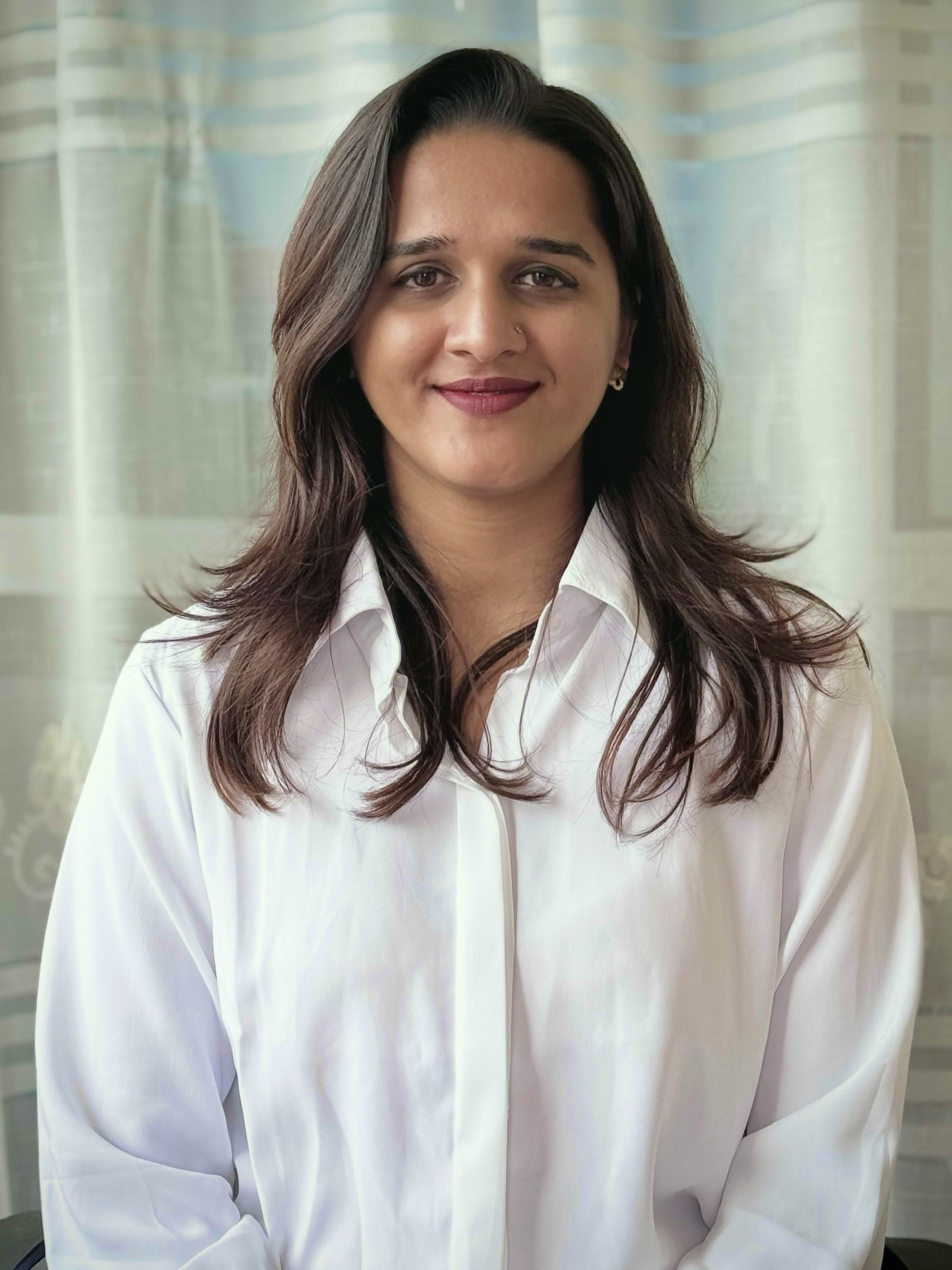
Smriti Simkhada
90/90 Perfect Scorer
PTE Summarise Spoken Text Word Limit 2026 — Complete Guide
Summarise Spoken Text (SST) is a high-value PTE Academic Writing task that also contributes to your Listening score. One of the most commonly misunderstood aspects of SST is the word limit — and the consequences of going under or over it. This guide explains exactly how the word limit works and how to write a consistently scoring SST response.
For broader context, see the PTE score requirements guide and the Highlight Correct Summary tips.
Improve Your PTE Score
Nepali students often struggle with Oral Fluency. My 15-day batch focuses on the speaking and fluency criteria that PTE evaluates — with targeted practice and feedback.
What Is the SST Word Limit?
PTE Academic's Summarise Spoken Text task requires a written summary of 50 to 70 words. This is non-negotiable:
- Under 50 words: Your response is scored as incomplete ("Form" criterion fails). You lose the Form score and likely part of the Content score.
- Over 70 words: Your response exceeds the word limit. The Form criterion fails and the scoring system may not process the extra content.
- 50-70 words: Full marks available for Form; other criteria (Content, Grammar, Vocabulary) are then assessed normally.
The word counter in the SST response box shows your current count in real time. Monitor it as you write.
What Does SST Contribute To?
Summarise Spoken Text is a dual-skill task:
- Writing communicative skill: Grammar, Vocabulary, and Written Discourse from your written response
- Listening communicative skill: Content coverage — whether you included the main points from the audio
A well-written SST that covers the key points lifts both Writing and Listening scores simultaneously, making it one of the highest-value tasks in PTE Academic.
How to Write 50-70 Words Consistently
The 50-70 word target is tight. Students who write too freely often go over 70; students who are too cautious produce under 50. The fix is a structural template that naturally produces the right length.
The SST Structure Template
Follow this 4-part structure for every SST response:
- Topic sentence (8-12 words): "The lecture discusses [main topic] and its impact on [related area]."
- Main point (15-20 words): "The speaker explains that [main argument or finding], noting that [key detail or example]."
- Supporting point (15-18 words): "Furthermore, [second point from lecture], which [explanation or implication]."
- Conclusion (10-15 words): "In conclusion, the lecture highlights [overall significance or call to action]."
This structure produces approximately 48-65 words — right in the target range. Adjust sentence length slightly in parts 2 or 3 to reach exactly 50-70 words.
Note-Taking Strategy During the Audio
You have 10 minutes to write after the audio ends. Use the first 2-3 minutes to write your notes, then write and revise your summary. During the audio (typically 60-90 seconds):
- Note the main topic (first 10 seconds usually states it clearly)
- Note 2-3 key points or examples (nouns and verbs, not full sentences)
- Note the conclusion or implication if stated
Your 4-5 note words become the foundation of your 50-70 word summary.
Common Word Count Mistakes
- Writing 40-45 words and submitting: Check the counter before submitting. If you are at 45 words, add one more supporting phrase: "...particularly in the context of [related area]." This adds 6-8 words and meets the minimum.
- Writing 75+ words and not editing down: If you have gone over 70, cut the least important clause or shorten adjective phrases ("very significant" → "significant"). Every word removed below 70 keeps your Form score safe.
- Counting words manually and miscounting: The word counter in the response box is accurate. Trust it — do not count manually.
SST Grammar and Vocabulary Tips
- Use complex sentence structures: "The lecture discusses X, arguing that Y because Z." One long sentence covers multiple points efficiently within the word limit.
- Use academic vocabulary: "highlights", "emphasises", "demonstrates", "addresses", "investigates" — these are higher-scoring than "shows", "says", "talks about".
- Avoid first-person: "The speaker discusses..." not "He says..." or "I heard that..."
What Students Say About This Preparation
"Following the strategy Smriti Didi outlined, my Oral Fluency improved enough to push Speaking above 79 in my next attempt." — Rahul T., Kathmandu
"The structured approach made the difference. I had been retaking without a plan — one focused batch changed that." — Anita S., Pokhara
Results reflect individual student preparation experience. Scores depend on personal effort, starting ability, and test conditions. No specific outcome is guaranteed.
SST vs SWT Word Limits — Side by Side
| Aspect | Summarise Spoken Text (SST) | Summarise Written Text (SWT) |
|---|---|---|
| Min words | 50 | 5 |
| Max words | 70 | 75 |
| Sweet spot | 55-65 | 55-65 |
| Sentences allowed | Multiple OK | Strictly one |
| Prep time | 10 minutes after audio | 10 minutes per passage |
| Source | 60-90 second academic lecture audio | Academic passage (visible throughout) |
| Cross-module impact | Listening + Writing | Reading + Writing |
Mistake → Fix: SST Word-Limit Errors
- Mistake: Writing 47 words because notes were thin.
Fix: Below 50 triggers Form 0. If short, add a closing implication: "This suggests that further research is needed in..." adds 7-10 words while improving Content. - Mistake: Writing 75 words and assuming "close enough."
Fix: 71+ words triggers Form penalty. Trim before submitting. Aim 55-65 to leave margin. - Mistake: Using two short sentences when one compound-complex sentence would fit cleaner.
Fix: Two sentences are allowed in SST (unlike SWT) but one well-structured sentence often scores better on Linguistic Range. - Mistake: Forgetting that SST scores Writing — typing a content-correct but grammatically loose summary.
Fix: SST is graded on Grammar, Vocabulary, Spelling, Written Discourse — same as essay. Treat it as a Writing task, not just a Listening task.
Step-by-Step: SST Execution in 10 Minutes
- During audio (60-90s): Take notes — nouns, verbs, signal phrases. No full sentences.
- Minute 0-2 of writing: Review notes. Identify topic, 2 supporting points, conclusion.
- Minute 2-7: Write the summary at 55-65 words.
- Minute 7-9: Proofread — grammar, articles, prepositions, spelling, word count.
- Minute 9-10: Final pass — verify word count is in 55-65 range and submit.
Why SST Is High-Leverage Across Both Listening and Writing
SST appears 1-2 times per exam, but each item carries proportionally heavy weight because it scores into both Listening (correct content from audio) and Writing (Grammar, Vocabulary, Spelling, Written Discourse). A clean 60-word SST simultaneously lifts your Listening score and your Writing enabling skills — the kind of cross-module leverage that no single-skill task offers.
Frequently Asked Questions
What happens if I submit exactly 50 words vs exactly 70 words?
Both are within the acceptable range and both receive full marks for Form. The content, grammar, and vocabulary of those 50 or 70 words then determine the rest of your score. Writing exactly 70 words of high-quality content is not better than writing exactly 50 words of high-quality content — the ceiling is the same.
Can I write in bullet points for SST?
No. SST must be written as connected prose — sentences, not bullet points. Bullet points do not score for Written Discourse and may fail the Form criterion.
Is it better to cover more points briefly or fewer points in depth?
Cover 2-3 main points with one sentence each, rather than 5 points in half a sentence each. Content scoring rewards coverage of main ideas, not exhaustive listing of every detail. Quality and coherence over quantity of points.
Improve Your SST Score
SST is covered in the 15-day group batch (Rs. 2,500) Writing module, with practice and template refinement sessions. For students where Writing is the blocking skill for 79+, the 1-on-1 mentorship provides personalised SST feedback on your actual responses. Explore free study materials or read the PTE Academic guide.
Continue Your PTE Preparation
Related guides for Nepali students preparing for PTE Academic and PTE Core:
About Smriti Simkhada
Smriti is a PTE Academic perfect scorer (90/90) providing structured PTE coaching for Nepali students. She has helped over 1,000 students prepare for Australia PR and Canada immigration through structured, criteria-aligned coaching.