AHPRA PTE Requirements 2026: Nurses, Pharmacists, Physiotherapists & Allied Health (23 April 2026 Update)
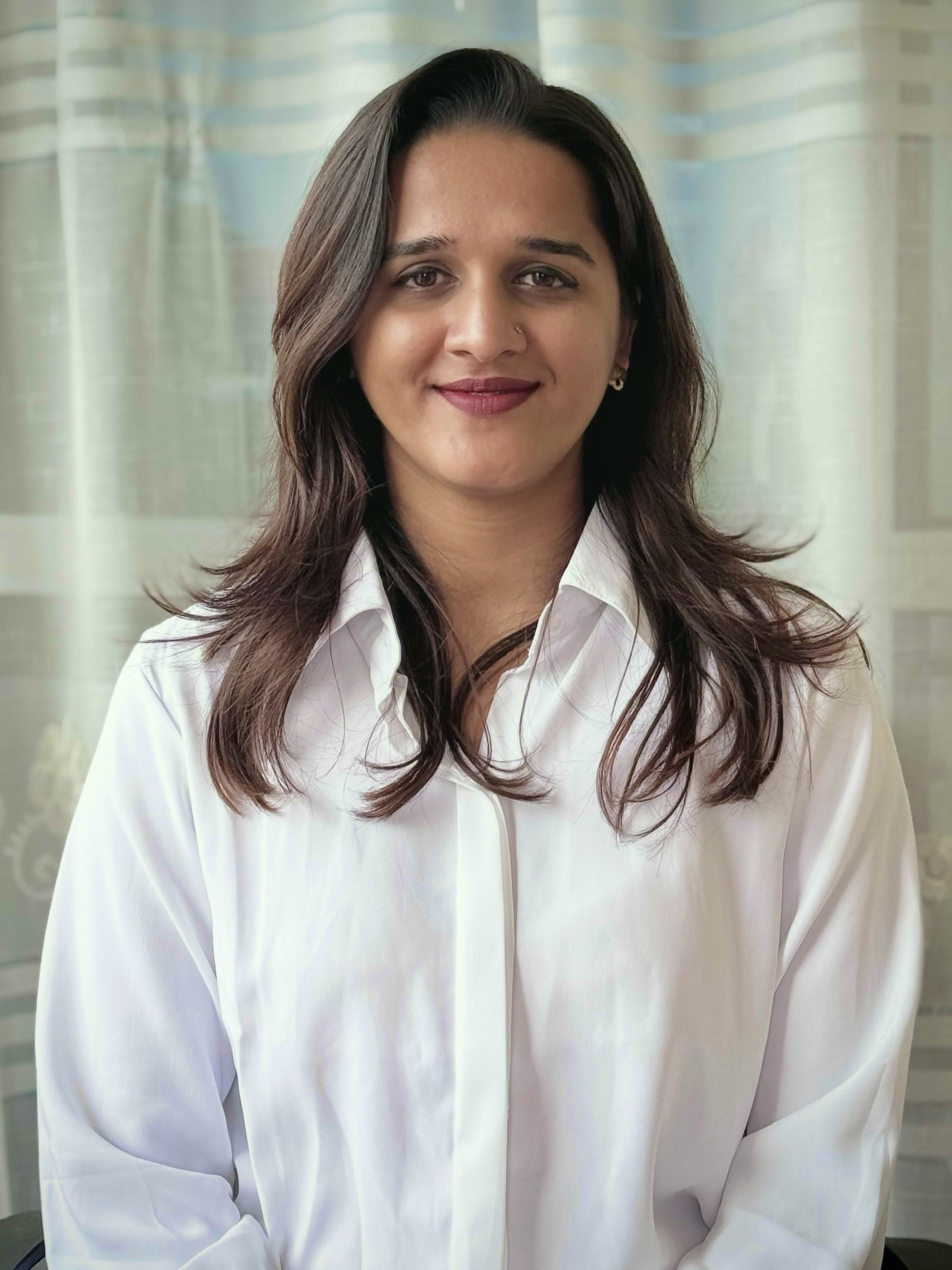
Smriti Simkhada
90/90 Perfect Scorer
Introduction: What Changed on 23 April 2026
If you are a Nepali nurse, pharmacist, physiotherapist, dentist or allied health professional planning to register in Australia, the AHPRA PTE requirements 2026 have just been re-stated. Effective 23 April 2026, AHPRA updated its English Language Skills Registration Standard. PTE Academic minimums are now: Overall 63, Listening 58, Reading 59, Writing 60, Speaking 76.
The sub-skill numbers look lower than the old "65 across the board" rule, but the English level AHPRA expects has not dropped. Pearson refreshed how PTE raw scores map to underlying proficiency (a concordance update). The bar moved on the ruler; the height of the bar did not. Speaking still maps to near-superior spoken English; Writing still maps to "good user" territory.
Improve Your PTE Score
Nepali students often struggle with Oral Fluency. My 15-day batch focuses on the speaking and fluency criteria that PTE evaluates — with targeted practice and feedback.
This article is the 2026 hub on AHPRA PTE requirements for every regulated health profession, written for Nepali healthcare professionals. We break down the new minimums, explain why Speaking 76 and Writing 60 trip up most candidates, walk through profession-by-profession pathways, compare PTE vs OET vs IELTS vs TOEFL vs Cambridge, and share an 8-week prep plan.
The New AHPRA PTE Score Thresholds (Effective 23 April 2026)
The same minimums apply uniformly across all 15 National Boards: nursing, midwifery, pharmacy, physiotherapy, dentistry, occupational therapy, medical radiation practice, podiatry, optometry, osteopathy, chiropractic, psychology, Chinese medicine and Aboriginal & Torres Strait Islander health practice.
PTE Academic Score Table — AHPRA (Effective 23 April 2026)
| Band | Minimum (effective 23 April 2026) | Notes |
|---|---|---|
| Overall | 63 | Composite minimum across all four skills |
| Listening | 58 | Floor score for the Listening section |
| Reading | 59 | Floor score for the Reading section |
| Writing | 60 | Concordance-aligned to "good user" proficiency |
| Speaking | 76 | Concordance-aligned to near-superior spoken English |
Why the Numbers Moved (Concordance, Not Standard Drop)
AHPRA did not lower its English requirement. Pearson updated its concordance research — the mapping between PTE raw scores and underlying CEFR-style proficiency. The proficiency AHPRA demands is unchanged; only the score-to-proficiency mapping moved. So Speaking 76 today represents the same near-superior spoken English that the older mapping called for. If your prep plan was built around the old "65 across all bands" rule, retarget to the new floor scores plus the Overall 63 composite.
Single Sitting vs Two-Sitting Combination
By default, AHPRA expects all minimums in a single PTE Academic sitting. However, the standard allows combining results from a maximum of two sittings within a 12-month period, provided each individual test meets defined floor scores. In practice you can sit PTE twice within 12 months and have AHPRA take the highest sub-skill from each — but you only get two attempts inside the window, and per-test floors must hold. Single-sitting passes are still cleaner; treat the two-sitting rule as insurance, not Plan A. Re-read the current AHPRA standard for the exact floor-score conditions before submitting.
Test Validity
PTE Academic results remain valid for two years from the test date for AHPRA registration. Verify on the AHPRA standard before booking.
Why Speaking 76 Is the Most Common Stuck Point
The AHPRA PTE Speaking 76 threshold reflects the regulator's view that patient-safety communication requires near-superior spoken English. Under the 23 April 2026 concordance, 76 corresponds to that level — roughly aligned with IELTS Speaking 7.0 and OET Grade B. Three skill anatomy components decide your Speaking score:
1. Oral Fluency
The PTE AI scoring engine measures pace, hesitation, false starts, and rhythm. To hit 76 you cannot afford long pauses, repeated words, or rebooting a sentence mid-flow. Most Nepali healthcare professionals lose marks here — not on pronunciation, but on hesitation during Describe Image and Retell Lecture.
2. Pronunciation
Pronunciation does not require a British or Australian accent. It requires intelligibility — clean consonant clusters, vowel length distinguished (ship vs sheep), and correct word stress. Nepali speakers commonly drop the final /s/, /z/, /t/, /d/ — these are scoring killers in Read Aloud and Repeat Sentence.
3. Content Delivery
For Describe Image, Retell Lecture and Answer Short Question, the AI rewards complete, on-topic answers delivered inside the time limit. A perfectly pronounced but incomplete answer scores below an averagely pronounced complete one.
Why Writing 60 Is the Second Stuck Point
Writing 60 sits in "good user" territory under the updated concordance. PTE Writing (Summarize Written Text + Essay) is scored across content, form, grammar, vocabulary range, spelling, linguistic range, and development/structure/coherence. Most stuck candidates lose marks on grammar precision and on essays that drift off-prompt. For Nepali healthcare professionals, Writing 60 is usually achievable with a tight template plus 30 hours of focused practice. Speaking 76 stays the harder hurdle.
AHPRA Pathway by Profession
The same AHPRA PTE requirements 2026 (Overall 63, L58, R59, W60, S76) apply to every health profession below. The registration pathway around the English test differs. Here is how each profession should plan.
Nurses and Midwives (NMBA)
English evidence sits alongside NCLEX-RN and the OSCE in the Outcomes-Based Assessment pathway. Nepali RNs trained at TU/CTEVT/PU institutions almost always need to provide English evidence — English-medium education is rarely a standalone exemption. Plan PTE before NCLEX.
Pharmacists (Pharmacy Board of Australia)
Apply through the Australian Pharmacy Council (APC). KAPS does not test spoken English, so the Speaking 76 hurdle hits pharmacists harder than nurses. Lock PTE first, then attack KAPS Part 1 and Part 2.
Physiotherapists (Physiotherapy Board)
Australian Physiotherapy Council pathway: Eligibility → Written Assessment → Clinical Assessment. PTE must be valid at each stage — do not let your two-year validity expire mid-pathway.
Dentists (Dental Board of Australia)
Australian Dental Council (ADC) examinations apply. Same AHPRA PTE minimums. Nepali BDS graduates often speak strong clinical English but trip on PTE Speaking templates — a short PTE-specific course fixes this fast.
Allied Health (OT, Medical Radiation, Optometry, Podiatry, Psychology, Chiropractic, Osteopathy, Chinese Medicine)
Each allied profession has its own assessing authority, but the AHPRA English standard is uniform. Aboriginal & Torres Strait Islander health practice has alternative frameworks — verify on the AHPRA site.
PTE vs OET vs IELTS Academic vs TOEFL iBT vs Cambridge English for AHPRA
Under the 23 April 2026 standard, AHPRA accepts five English tests: PTE Academic, OET, IELTS Academic, TOEFL iBT, and Cambridge English (C1 Advanced / CAE). Below is the comparison most relevant to Nepali healthcare professionals choosing a test. Re-confirm thresholds for each test on the AHPRA standard at the time you book.
Comparison Table — AHPRA 2026 Equivalents (Indicative)
| Test | Speaking | Writing | Listening | Reading | Test Length | Result Speed | Cost in Nepal (NPR) |
|---|---|---|---|---|---|---|---|
| PTE Academic | 76 | 60 | 58 | 59 | ~2 hrs | 1-2 days | ~28,000-32,000 |
| OET (healthcare-specific) | B (350) | B (350) | B (350) | B (350) | ~3 hrs | ~16 days | ~45,000-50,000 |
| IELTS Academic | 7.0 | 7.0 | 7.0 | 7.0 | ~2 hrs 45 min | 3-13 days | ~32,000-34,000 |
| TOEFL iBT | 26 | 27 | 28 | 28 | ~3 hrs | 4-8 days | ~38,000 |
| Cambridge English (C1 Advanced) | 185 | 185 | 185 | 185 | ~4 hrs | ~14 days | ~32,000-36,000 |
Note: PTE Academic minimums above reflect the 23 April 2026 AHPRA standard. Other tests' thresholds are indicative — confirm against the current AHPRA standard before booking.
Why Most Nepali Candidates Choose PTE
- Speed — results in 1-2 days vs OET's 16 days; critical when AHPRA, visa, and assessing-body deadlines stack up.
- AI scoring — no human examiner bias against Nepali accents.
- Cost — cheaper than OET in Nepal.
- Templates work — PTE rewards predictable structure, which is teachable in 6-8 weeks.
- Two-sitting combination — if your first attempt falls short on one band, AHPRA's 12-month two-sitting rule gives you a second chance to combine sub-skill bests, provided floor scores are met.
OET is the right choice if you have already failed PTE Speaking twice and your hesitation problem persists despite practice — OET's role-play format suits some healthcare professionals better. For most Nepali candidates, PTE Academic remains the fastest, cheapest path through the new AHPRA PTE requirements 2026.
Common Mistakes Nepali Healthcare Professionals Make
- Reading the lower numbers as a softer bar. The bar did not drop — Pearson re-mapped scores. Speaking 76 still demands near-superior spoken English. Budget 6-8 weeks of structured Read Aloud, Repeat Sentence and Describe Image practice.
- Practising medical English instead of PTE English. PTE tests academic fluency, not clinical vocabulary. Over-preparing terminology and under-preparing templates is a common nursing mistake.
- Splitting attention between NCLEX/KAPS and PTE in the same month. Lock PTE first.
- Dropping final consonants in Read Aloud (/s/, /z/, /t/, /d/). Fixing this alone has lifted students from Speaking 70 to 78.
- Forgetting the Overall 63 composite. You can clear every floor (L58/R59/W60/S76) and still miss Overall 63 if you only just scrape each band. Aim above the floors.
- Misreading the two-sitting rule. AHPRA allows a maximum of two sittings within 12 months under floor-score conditions — not three, and per-skill minimums are not waived.
- Letting PTE expire mid-pathway. Two-year validity sounds long until you are 14 months into bridging. Budget for one renewal.
- No backup test centre. Slot availability tightens around AHPRA cycles — book Bharatpur as a fallback for Kathmandu (or vice versa).
Step-by-Step 8-Week Preparation Method for AHPRA PTE Requirements 2026
- Week 1 — Diagnostic mock. Full official PTE mock. Identify your weakest band (almost always Speaking). Record three Read Aloud responses; audit hesitation, dropped consonants, pace. Note Overall against 63.
- Week 2 — Read Aloud + Repeat Sentence drills. 30 minutes daily on each. Clean delivery on 8 of 10 attempts before progressing.
- Week 3 — Describe Image + Retell Lecture templates. One flexible template each. 5 timed reps daily.
- Week 4 — Writing. Master SWT in one complex sentence. Lock essay template (230-280 words). Three essays, self-marked.
- Week 5 — Reading speed + grammar. Fill in the Blanks: 30 daily. Reorder Paragraphs under 2 minutes. Aim comfortably above Reading 59.
- Week 6 — Listening precision. Write from Dictation daily. SST template tight (50-70 words). Aim above Listening 58.
- Week 7 — Full mocks + weak-area surgery. Two mocks; 90 minutes after each on the lowest band.
- Week 8 — Test simulation + booking. One mock at your real slot's time of day. Book the real test for end of week 8.
Realistic at 12-15 hours per week for working professionals. Diaspora candidates on Sydney/Melbourne/Toronto/London/Doha shifts can compress this with a 1-on-1 coach mapped to their roster.
Tips for Nepali Healthcare Professionals
- Accent neutralisation, not accent change. The PTE AI does not penalise a Nepali accent — it penalises unclear consonants and dropped word endings. Record daily, audit, re-record.
- Use healthcare vocabulary in Essays when prompts allow — it lifts Vocabulary range marks.
- Practise Reading on a 32-minute timer, not section-by-section. The real test runs back-to-back.
- Pick the test centre closest to where you sleep the night before. Bharatpur is calmer; Kathmandu has more slots.
- Time zones (already abroad): Nepali nurses in Sydney/Melbourne/Brisbane prep at 9-11 PM AEST after shifts — that matches a Nepal-based 1-on-1 coach at 4-6 PM Nepal time perfectly.
- 1-on-1 mentorship beats group batches for AHPRA candidates. Speaking 76 needs personalised pronunciation feedback that a 15-day group batch cannot deliver. PTE Nepal's flagship 1-on-1 program (Rs. 15,000) is built for this.
Frequently Asked Questions
Q: What are the new AHPRA PTE Academic minimums effective 23 April 2026?
A: Overall 63, Listening 58, Reading 59, Writing 60, Speaking 76. These are the per-skill floors plus the composite Overall minimum under the AHPRA English Language Skills Registration Standard. Always reconfirm on the AHPRA standard before booking.
Q: Did AHPRA lower its English requirement?
A: No. The English proficiency AHPRA expects has not dropped. Pearson updated its concordance — the technical mapping between PTE raw scores and the underlying CEFR-style proficiency level. The score numbers shifted; the proficiency expected for Australian healthcare practice is unchanged.
Q: Can I combine my best PTE scores from two test sittings for AHPRA?
A: Yes, within limits. The standard allows you to combine results from a maximum of two PTE Academic sittings within a 12-month period, provided each individual test result meets the defined floor scores. A single-sitting pass is still cleaner — treat the two-sitting rule as a backup, not Plan A.
Q: Are AHPRA PTE requirements 2026 the same for nurses, pharmacists, and physiotherapists?
A: Yes. The same minimums (Overall 63, L58, R59, W60, S76) apply across every AHPRA-regulated profession. The pathway around the English test differs by profession, but the English score itself is uniform.
Q: How long are PTE Academic results valid for AHPRA?
A: Two years from the test date. Plan your bridging assessments and registration application to land within that window so you do not need to retake.
Q: Which English tests does AHPRA accept besides PTE Academic?
A: Under the 23 April 2026 standard, AHPRA accepts PTE Academic, OET, IELTS Academic, TOEFL iBT, and Cambridge English (C1 Advanced). Each test has its own minimums — check the AHPRA standard for the exact thresholds at the time you book.
Q: Is PTE Academic easier than OET for Nepali healthcare professionals?
A: For most Nepali candidates yes — faster results, lower cost in Nepal, AI scoring without human accent bias, and template-driven preparation. OET suits candidates who have failed PTE Speaking repeatedly and prefer role-play formats over Read Aloud and Repeat Sentence.
Q: How much does PTE Academic cost in Nepal in 2026?
A: Approximately NPR 28,000-32,000 per attempt, with slight variation by city and date. See our PTE cost article for the latest pricing and voucher discounts.
Q: Where can I take the PTE Academic in Nepal for my AHPRA application?
A: Pearson-authorised PTE Academic test centres operate in Kathmandu and Bharatpur. Either is accepted for AHPRA — there is no benefit to one over the other from AHPRA's perspective.
Q: How long should I prepare for PTE to hit Speaking 76 from a current 65?
A: Realistically 6-8 weeks of focused, structured practice with daily Read Aloud and Repeat Sentence drills, plus 1-on-1 feedback on pronunciation patterns. Without 1-on-1 feedback, expect 10-12 weeks.
Conclusion: Meeting the New AHPRA PTE Requirements 2026
The 23 April 2026 update to AHPRA PTE requirements 2026 — Overall 63, Listening 58, Reading 59, Writing 60, Speaking 76 — re-states the bar in the language of Pearson's updated concordance. The per-skill numbers look different, but the English proficiency Australian healthcare regulators expect has not moved. Speaking 76 in particular still demands near-superior spoken English and needs structured, personalised preparation — not generic group classes.
PTE Nepal's flagship 1-on-1 private mentorship programme (Rs. 15,000) is built precisely for the new AHPRA PTE requirements 2026. Sessions are scheduled around your shifts — Bharatpur, Kathmandu, Sydney, Melbourne, Toronto, London or Doha — and every drill is mapped to AHPRA's exact bands and the Overall 63 composite. Visit /coaching/one-on-one/ to book a free orientation call, or read more about PTE Academic and PTE coaching in Bharatpur. To meet the team, see /about/.
Hit Speaking 76, clear the new AHPRA PTE requirements 2026, and move on to NCLEX, KAPS, APC or your profession-specific assessment with one major hurdle behind you.
About Smriti Simkhada
Smriti is a PTE Academic perfect scorer (90/90) providing structured PTE coaching for Nepali students. She has helped over 1,000 students prepare for Australia PR and Canada immigration through structured, criteria-aligned coaching.