Answer Short Question PTE: Why You Shouldn't Overthink It
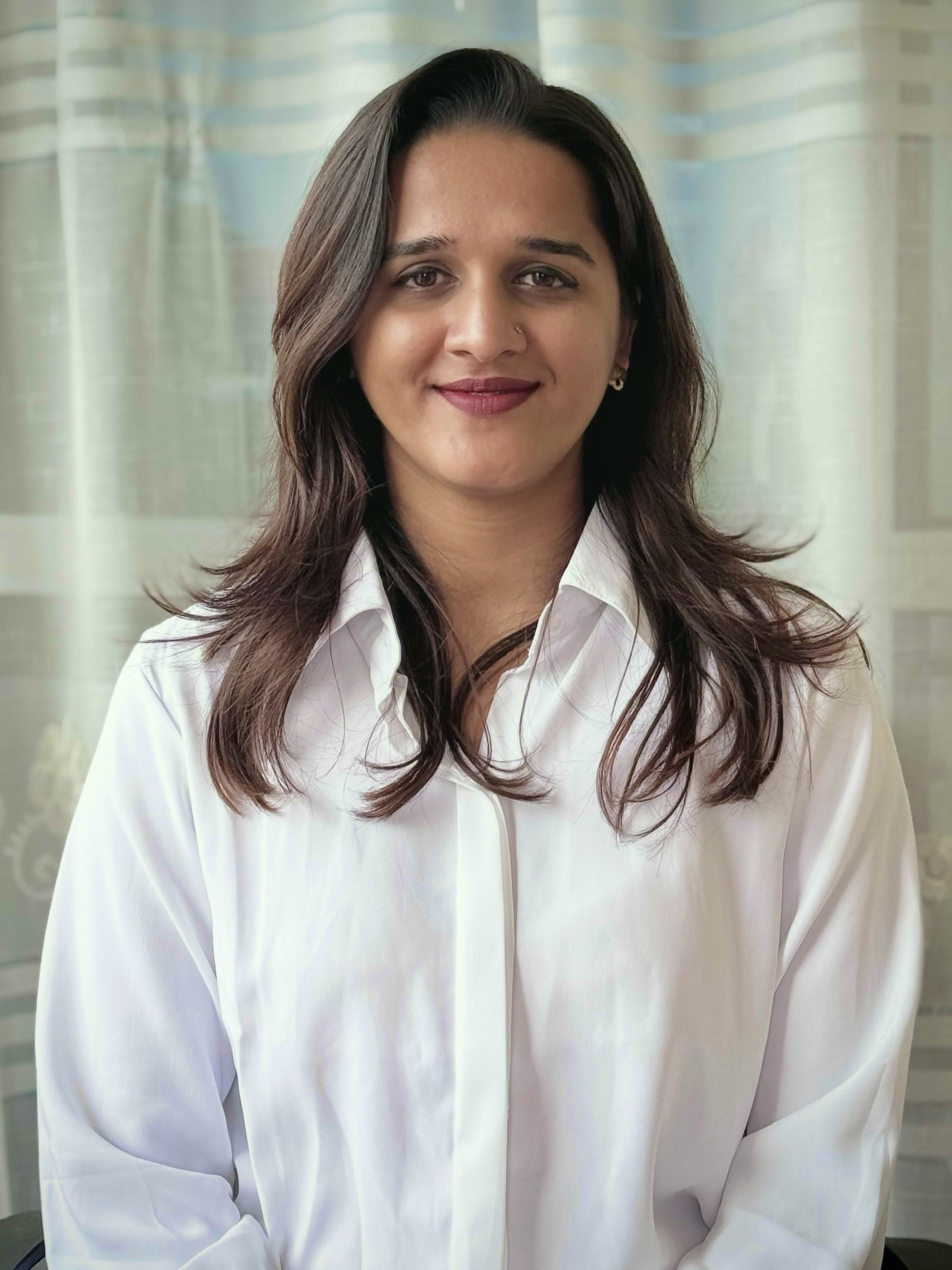
Smriti Simkhada
90/90 Perfect Scorer
PTE Answer Short Question 2026 — Complete Strategy Guide for Nepal Students
PTE Answer Short Question (ASQ) is one of the most underestimated tasks in the entire PTE Academic exam. Many Nepali students spend hours preparing for Describe Image or Summarise Written Text but barely think about ASQ — then lose easy marks on exam day. This guide covers everything you need to know to score full marks on every ASQ in your PTE Academic exam in 2026.
What Is PTE Answer Short Question?
Answer Short Question is a PTE Academic Speaking task. You hear a short question (3-9 seconds), and you must respond within 10 seconds. The correct answer is typically a single word, number, or short phrase. The question is not shown on screen — you only hear it through the headset.
Improve Your PTE Score
Nepali students often struggle with Oral Fluency. My 15-day batch focuses on the speaking and fluency criteria that PTE evaluates — with targeted practice and feedback.
The task tests your ability to understand spoken English across a variety of topics and respond accurately and briefly. It appears in the Speaking section of PTE Academic but also contributes to your Listening score through enabling skills.
How Many ASQ Questions Are There?
Item count varies per test version. Verify the current count on pearsonpte.com/pte-academic. Each question is independent — there is no connection between them.
How Is ASQ Scored in PTE Academic?
ASQ is scored differently from other Speaking tasks:
- Correct answer: 1 point
- Incorrect answer: 0 points
- No partial credit — either correct or not
Per Pearson, ASQ is scored on Vocabulary (correct word) plus Pronunciation (clarity of the answer word). Oral Fluency is not scored on ASQ. Each correct ASQ contributes to your Speaking score; missing many costs measurable points, though Pearson does not publish an exact per-task deduction. Cite: pearsonpte.com/pte-academic/scoring/.
Common ASQ Question Categories
ASQ questions in PTE Academic come from a predictable range of topics. Practising these categories prepares you for the majority of questions you will encounter:
Science and Nature
- "What do you call the study of the universe?" → Astronomy
- "What process do plants use to make food from sunlight?" → Photosynthesis
- "What is the chemical symbol for water?" → H2O
- "What is the nearest star to Earth?" → The sun
Geography and Environment
- "What is the largest ocean in the world?" → The Pacific Ocean
- "What do you call rain that contains harmful chemicals?" → Acid rain
- "What is the name of the layer that protects Earth from UV radiation?" → The ozone layer
Medicine and Health
- "What is the main function of the heart?" → To pump blood
- "What type of doctor treats bone fractures?" → An orthopaedic surgeon (or "a surgeon")
- "What is the liquid part of blood called?" → Plasma
Technology and Computers
- "What do you call the main circuit board in a computer?" → The motherboard
- "What does PDF stand for?" → Portable Document Format
- "What is the Internet address of a website called?" → A URL (or web address)
Social Sciences and Law
- "What do you call a person who interprets laws in a court?" → A judge
- "What is the study of human society and culture called?" → Sociology (or Anthropology)
- "What type of government is headed by a prime minister?" → A parliamentary democracy (or "a parliament")
The 3-Step Strategy for Perfect ASQ Performance
Step 1 — Listen Actively, Not Passively
Many students do not listen carefully enough to the exact wording of ASQ questions. The question always contains the category of the answer. If you hear "what do scientists call…", the answer will be a scientific term. If you hear "what is a person called who…", the answer will be a job title or role.
Focus on the core question word (what, who, where, how many) and the topic category. This combination tells you what type of answer is expected.
Step 2 — Answer Immediately and Briefly
Do not pause to think for 4-5 seconds. Start speaking as soon as you know the answer. If you are unsure, give your best guess immediately — do not stay silent. Silence scores zero; an attempt at least demonstrates understanding.
The correct answer is almost always 1-3 words. Do not give long explanations. "Photosynthesis" is better than "It is the process where plants use sunlight to make food."
Step 3 — Build Your ASQ Vocabulary Before the Exam
Unlike Describe Image or Retell Lecture where fluency matters most, ASQ is purely a vocabulary and general knowledge test. Spending 20-30 minutes per day for two weeks on ASQ word lists across the categories above will significantly increase your score.
Use flashcard-style practice: read a question, speak the answer aloud within 3 seconds, check if correct. Do not just read the answers — vocalise them, because you will be speaking in the actual exam.
Common Mistakes Nepali Students Make on ASQ
- Thinking ASQ is too easy to prepare — This task loses marks precisely because students do not prepare for it. A dedicated 2-week ASQ vocabulary sprint before the exam recovers marks many students lose unnecessarily.
- Giving a long answer — "The answer is photosynthesis, which is the process plants use to convert sunlight into energy" is worse than simply saying "Photosynthesis." Long answers waste time and the extra words are ignored in scoring.
- Not speaking if unsure — Always attempt an answer. An incorrect answer scores 0, but silence also scores 0 — and silence can affect Oral Fluency scores in other tasks if it becomes a habit.
- Worrying about accent — ASQ is scored on the correctness of the answer word and clarity of pronunciation. A clear, correct word — even with a Nepali accent — receives full marks.
Tips for Nepali Students Specifically
- ASQ questions frequently come from international knowledge areas. Topics like medicine, science, law, and geography are universal — not Australia or UK-specific — so your existing knowledge applies well.
- Practice ASQ in English, not by translating from Nepali. The goal is to train direct recall in English, not translation speed.
- If a question asks about a measurement unit ("what is the SI unit of…"), the answers are: metres (distance), kilograms (mass), seconds (time), amperes (electric current), Kelvin (temperature), moles (amount of substance), candela (luminous intensity).
- Review common prefixes and suffixes: bio- (life), geo- (earth), astro- (star), demo- (people), eco- (environment). These appear frequently in ASQ questions.
What Students Say About This Preparation
"Following the strategy Smriti Didi outlined, my Oral Fluency improved enough to push Speaking above 79 in my next attempt." — Rahul T., Kathmandu
"The structured approach made the difference. I had been retaking without a plan — one focused batch changed that." — Anita S., Pokhara
Results reflect individual student preparation experience. Scores depend on personal effort, starting ability, and test conditions. No specific outcome is guaranteed.
Frequently Asked Questions
Does ASQ affect my Listening score?
ASQ is a Speaking task, not a Listening task. However, it does test your listening comprehension (since you must understand the question to answer it), and the enabling skills it tests can marginally affect your overall communicative skill scores. The primary impact is on Speaking.
How many words should I say in my ASQ answer?
Typically 1 to 3 words. One correct word is ideal. Never give more than one sentence — the scoring system awards marks for the correct word/phrase, not for explanation.
Is there a beep before ASQ starts?
Yes. After the recording prompt, there is a short beep that signals the start of the recording. Speak your answer after the beep, within the 10-second window.
Can I answer in Australian or British spelling?
Both British and American spellings are accepted. Since ASQ is spoken (not typed), spelling is not relevant — your spoken pronunciation is what matters.
Prepare for PTE Academic in Nepal
If you are preparing for PTE Academic and want to improve your overall score, including ASQ performance, the 15-day group batch (Rs. 2,500) covers all PTE tasks including Speaking section strategies. For students who need personalised attention on specific tasks, the 1-on-1 mentorship programme provides a targeted plan based on your score report.
Browse free study materials for PTE Academic practice resources, or explore the PTE Academic guide for a full overview of the exam.
Continue Your PTE Preparation
Related guides for Nepali students preparing for PTE Academic and PTE Core:
About Smriti Simkhada
Smriti is a PTE Academic perfect scorer (90/90) providing structured PTE coaching for Nepali students. She has helped over 1,000 students prepare for Australia PR and Canada immigration through structured, criteria-aligned coaching.