Describe Image PTE: Simple 35-Second Formula for Maximum Fluency
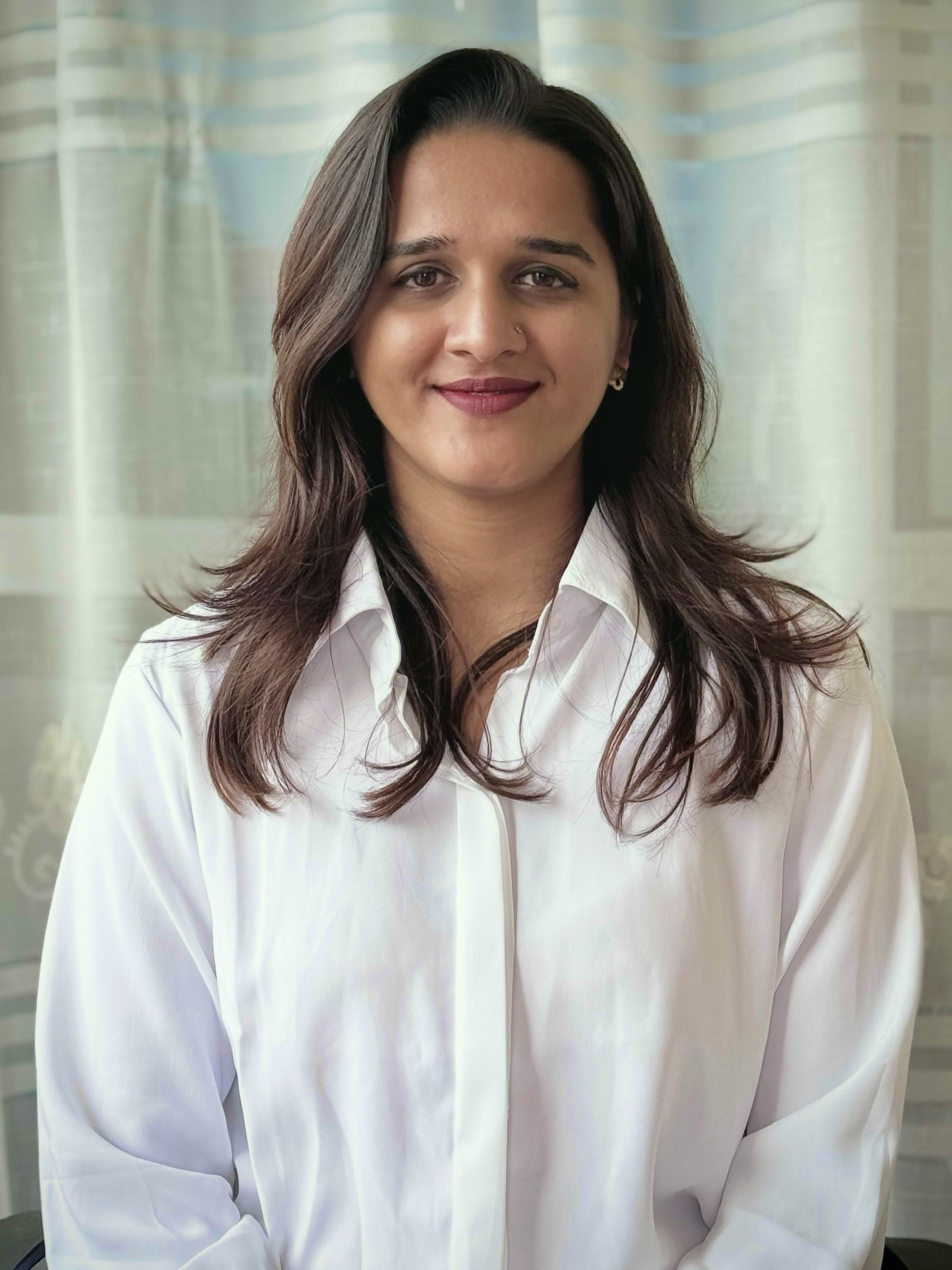
Smriti Simkhada
90/90 Perfect Scorer
PTE Describe Image 2026 — The Formula Nepali Students Need
Describe Image is one of the most important tasks in PTE Academic's Speaking section, and for many Nepali students, it is also the most challenging. You have 25 seconds to prepare and 40 seconds to speak. The image can be a bar graph, line chart, pie chart, table, map, or process diagram. If you speak smoothly and cover the key data points, you can score 79+ in Speaking.
For broader context, see the PTE score requirements guide and the the flow-over-correction rule.
Improve Your PTE Score
Nepali students often struggle with Oral Fluency. My 15-day batch focuses on the speaking and fluency criteria that PTE evaluates — with targeted practice and feedback.
This guide gives you the exact formula and templates for every Describe Image type that appears in PTE Academic in 2026.
How Is Describe Image Scored?
Per Pearson's official scoring guide, Describe Image is scored against three criteria:
- Content — Did you describe the key information accurately?
- Oral Fluency — Did you speak smoothly, without long pauses or hesitations?
- Pronunciation — Were you clearly understood?
Oral Fluency carries significant weight in Speaking. A student who speaks fluently but misses one data point often scores higher than a student who mentions all data points but hesitates frequently. Prioritise smooth, connected speech over perfect accuracy of every number.
The Universal Describe Image Formula
Regardless of the image type, every strong Describe Image response follows this 5-part structure:
- Introduction — State what the image shows (1-2 sentences)
- Main trend or highest/lowest point — Identify the dominant pattern (1-2 sentences)
- Second key point — A comparison, contrasting figure, or notable trend (1-2 sentences)
- Minor point or overall observation — Something specific about one data set (1 sentence)
- Conclusion — Summarise the overall message (1 sentence)
This structure gives you 6-8 sentences — enough to fill 35-40 seconds with natural speech and cover sufficient content for a high Content score.
Template for Bar Graphs and Column Charts
Use this template and replace the bracketed sections with actual data from the image:
The bar graph shows [what the graph measures] across [categories/time periods]. [Highest bar] recorded the highest value at [number/percentage], while [lowest bar] had the lowest at [number]. [Second notable trend or comparison]. [One additional observation about any specific category]. Overall, the data suggests that [summary of the main finding].
Preparation tip: During your 25-second preparation, identify: (1) the graph's topic, (2) the highest value, (3) the lowest value, (4) one comparison. Do not try to memorise all values — focus on these four points.
Template for Line Graphs and Trend Charts
The line graph illustrates [what is measured] from [start year] to [end year]. Overall, [subject] shows a [rising/declining/fluctuating] trend over the period. [Specific peak or trough — highest or lowest point]. [Comparison between two lines if multiple lines shown]. The data indicates that [brief interpretation of the overall pattern].
Key language for line graphs: "increased significantly", "declined gradually", "remained stable", "reached its peak in", "hit its lowest point in", "showed a sharp rise", "experienced a gradual decline".
Template for Pie Charts
The pie chart presents [what is measured] broken down by [categories]. The largest segment is [category] at [percentage], accounting for more than [fraction] of the total. [Second largest category] follows at [percentage]. [Third category or grouping of smaller categories]. In summary, the chart shows that [dominant pattern or inequality in distribution].
Preparation tip for pie charts: Focus on the largest segment, the smallest segment, and whether two segments combined account for a majority. Do not try to mention every slice.
Template for Tables
The table compares [what is compared] across [rows and columns]. According to the data, [highest value cell] shows the highest figure at [number], while [lowest value cell] is the lowest at [number]. Looking at [row or column], [observation about a pattern]. Overall, the table indicates that [main finding or trend].
Template for Maps and Diagrams
The map/diagram shows [what is depicted]. [Identify key feature or location]. Comparing [time 1] and [time 2], the most significant change is [main difference]. [A second change or addition]. Overall, the [map/diagram] illustrates that [conclusion about development or change].
Template for Process Diagrams
The diagram illustrates the process of [what is shown]. The process begins with [first stage]. This is followed by [second stage], during which [what happens]. Next, [third stage] occurs. The process concludes with [final stage or output]. Overall, the diagram describes a [linear/cyclical] process with [number of main stages].
Common Describe Image Mistakes Nepali Students Make
- Reading out every number — Listing "35%, 28%, 19%, 12%, 6%" disrupts fluency and adds no interpretive value. Mention the highest and lowest; group the rest.
- Starting with "This graph shows..." and freezing — Students who plan only an opening line run out of content after 15 seconds. Plan your structure, not just your opener.
- Long pauses mid-sentence — A 3-second pause costs more in Oral Fluency than saying a slightly incorrect figure fluently. Keep speaking, even if you have to generalise.
- Over-preparing content and under-preparing language — You have 25 seconds, not 5 minutes. Identify 4 data points and your conclusion language. That is enough.
- Not practising aloud — Reading Describe Image templates silently is nearly useless. You must record yourself and check that 40 seconds of smooth speech comes out naturally.
Step-by-Step 25-Second Preparation Strategy
- Seconds 1-5: Identify the image type (bar graph, pie chart, map, etc.) and what is being measured
- Seconds 6-12: Find the highest value/biggest element and the lowest value/smallest element
- Seconds 13-18: Identify one comparison or interesting contrast
- Seconds 19-25: Form your conclusion sentence — what does the data suggest overall?
Practise this mental routine until it is automatic. When the beep sounds, you should already know your 4-5 speaking points and be ready to connect them fluently.
What Students Say About This Preparation
"Following the strategy Smriti Didi outlined, my Oral Fluency improved enough to push Speaking above 79 in my next attempt." — Rahul T., Kathmandu
"The structured approach made the difference. I had been retaking without a plan — one focused batch changed that." — Anita S., Pokhara
Results reflect individual student preparation experience. Scores depend on personal effort, starting ability, and test conditions. No specific outcome is guaranteed.
Frequently Asked Questions
Does it matter if I say "28 percent" instead of "twenty-eight percent"?
No. Both are accepted. "28%" spoken as "twenty-eight percent" or "point two eight" — all forms are recognised. Fluency matters more than the exact number format.
What if I cannot understand the image in 25 seconds?
Start by describing the image type and its general topic. Then make general statements: "The chart shows a significant variation between categories, with one value clearly dominant." Fluency and some content score higher than silence or hesitation.
Can I use the same template for all image types?
The universal 5-part structure (Introduction, Main point, Second point, Minor observation, Conclusion) works for all image types. The specific language and vocabulary you use adjusts for each type, but the structure stays the same.
How many images appear in PTE Academic?
Item count varies per test version — verify the current count on pearsonpte.com/pte-academic. Describe Image remains a high-value Speaking task regardless of the exact number on a given test form.
Improve Your PTE Academic Speaking Score
If Describe Image is holding your Speaking score below 79, targeted task practice is more effective than repeating full mock tests. Smriti Simkhada's 1-on-1 mentorship includes specific Describe Image coaching with feedback on your actual recordings.
The 15-day group batch (Rs. 2,500) covers all Speaking tasks including Describe Image with template practice and live feedback. Browse free study materials for PTE Academic practice resources, and explore the complete PTE Academic guide for exam strategy.
Continue Your PTE Preparation
Related guides for Nepali students preparing for PTE Academic and PTE Core:
About Smriti Simkhada
Smriti is a PTE Academic perfect scorer (90/90) providing structured PTE coaching for Nepali students. She has helped over 1,000 students prepare for Australia PR and Canada immigration through structured, criteria-aligned coaching.