What Happens If the PTE AI Doesn't Understand Your Accent?
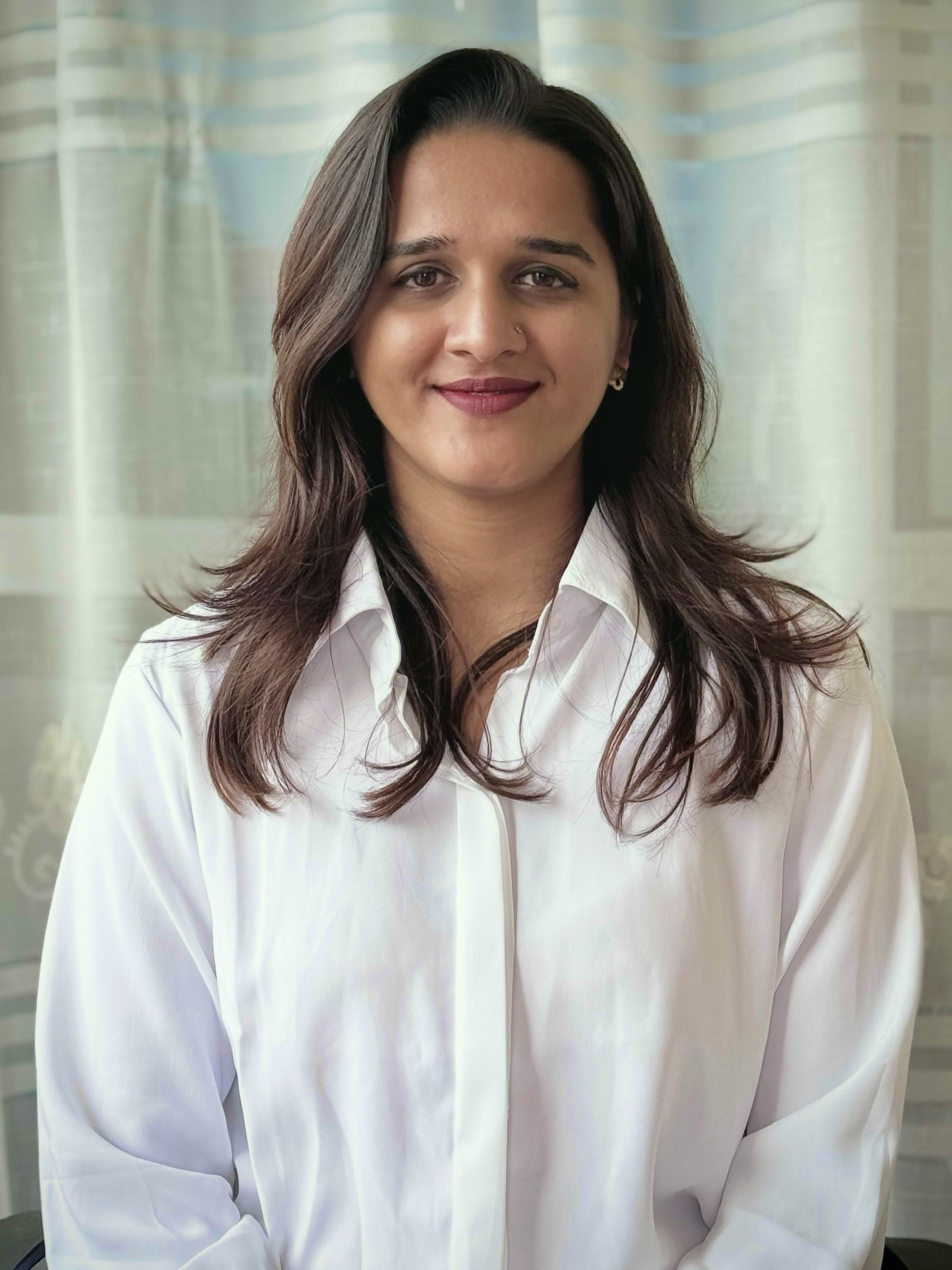
Smriti Simkhada
90/90 Perfect Scorer
Does PTE Academic AI Understand Nepali Accent? — 2026 Scoring Guide
One of the most common concerns Nepali students raise about PTE Academic is whether the AI scoring system understands their accent. Will a Nepali accent lower the Pronunciation score? Can the AI distinguish between an accent and a pronunciation error? This guide gives you the factual answer and tells you what actually matters for your Speaking score.
For broader context, see the PTE score requirements guide and the enabling skills explained.
Improve Your PTE Score
Nepali students often struggle with Oral Fluency. My 15-day batch focuses on the speaking and fluency criteria that PTE evaluates — with targeted practice and feedback.
The Short Answer: Yes, the PTE AI Handles Nepali Accents
PTE Academic uses fully automated AI scoring (per Pearson's official scoring documentation). The system is trained on a diverse range of English accents from speakers worldwide — including non-native speakers from South Asia. It is specifically designed not to penalise students for having a non-native accent when their speech is otherwise clear and intelligible.
What this means in practice: a Nepali accent that consistently uses correct vowel sounds for the target words and natural English stress patterns will score well in Pronunciation — even if it sounds noticeably different from British or American English.
What PTE Actually Scores in Pronunciation
PTE's Pronunciation enabling skill does NOT score whether you sound like a native speaker. It scores:
- Correct consonant articulation: Are consonant sounds distinguishable and correctly placed? (e.g., distinguishing "v" from "w", "th" from "d" or "t")
- Vowel quality: Are the vowels in target words recognisably correct? (not accent-specific but broadly intelligible)
- Word stress: Is the correct syllable stressed in multi-syllable words? (e.g., "im-POR-tant" not "IM-por-tant")
- Sentence stress: Are content words stressed naturally within sentences?
- Intelligibility: Can the words be clearly identified by the scoring system?
None of these criteria require a native accent. They require accurate and consistent application of English phonetic rules — which Nepali students can achieve without losing their natural accent character.
The Most Common Pronunciation Issues for Nepali Students
While the AI handles Nepali accents, certain specific sound patterns common in Nepali-accented English do affect Pronunciation scores. These are worth addressing:
1. V vs W Confusion
Many Nepali speakers use a similar sound for both "v" (in "very") and "w" (in "word"). In English, these are distinct consonants. Practise: put your top teeth on your lower lip for "v"; round your lips without teeth contact for "w".
2. Word-Final Consonant Clusters
English frequently ends words with consonant clusters: "text", "facts", "worked", "helped". Nepali phonology tends to simplify these — "tex" for "text", "fac" for "facts". Practise fully articulating word-final consonants, especially in Read Aloud.
3. Stress on Wrong Syllable
Multi-syllable words borrowed into Nepali English sometimes carry different stress from the standard: "adMINistration" vs "admiNISTRAtion". This is one of the most-penalised Pronunciation issues because the word becomes hard to identify.
4. Schwa Reduction
English uses the schwa sound (uh) for unstressed syllables — "the" becomes "thuh", "and" becomes "und", "of" becomes "uhv". Nepali-accented English often gives full vowel sounds to these reduced syllables, which sounds unnatural and can reduce Pronunciation scores in connected speech tasks.
What NOT to Worry About
- Your overall accent quality: The AI is not assessing whether you sound British or American. A clear Nepali accent with correct stress patterns scores as well as any other clear non-native accent.
- Aspiration differences: Nepali English typically has different aspiration patterns for "p", "t", "k" than British English. These do not significantly affect PTE Pronunciation scores.
- Intonation patterns: Rising vs falling intonation differences between Nepali and British English are generally not penalised in PTE scoring.
What Actually Causes Low Speaking Scores for Nepali Students
In our coaching experience with Nepali PTE students, Oral Fluency is more commonly the problem than Pronunciation. Many Nepali students show adequate Pronunciation scores but lower Oral Fluency scores due to:
- Hesitation pauses mid-sentence while thinking of the next word
- Restarting sentences after making mistakes (self-correction habit)
- Uneven pace — speaking fast then pausing, rather than steady connected speech
- Insufficient practice speaking continuously in English for 40 seconds on an academic topic
If your Speaking score is stuck at 73-78, check your score report's enabling skills. If Oral Fluency is noticeably lower than Pronunciation, focus your energy on fluency, not accent work.
What Students Say About This Preparation
"Following the strategy Smriti Didi outlined, my Oral Fluency improved enough to push Speaking above 79 in my next attempt." — Rahul T., Kathmandu
"The structured approach made the difference. I had been retaking without a plan — one focused batch changed that." — Anita S., Pokhara
Results reflect individual student preparation experience. Scores depend on personal effort, starting ability, and test conditions. No specific outcome is guaranteed.
Frequently Asked Questions
Should I try to speak in a British or American accent for PTE?
No. Attempting an accent that is not natural to you typically reduces Oral Fluency (because you are concentrating on accent instead of content) and does not improve Pronunciation scores meaningfully. Speak clearly in your natural English-accented voice with correct stress patterns.
My pronunciation was scored lower than I expected. What should I improve?
Review your score report. If Pronunciation is below 65, focus on: word stress (correct syllable emphasis), the v/w distinction, and word-final consonant articulation. These three areas account for the majority of Pronunciation scoring issues for Nepali speakers.
Does the AI have more difficulty with Nepali accent than other Asian accents?
No evidence supports this. PTE's scoring system is calibrated to handle a wide variety of non-native accents consistently. Score patterns for Nepali students are similar to patterns for other non-native English speakers from South and Southeast Asia.
Build Speaking Confidence
Understanding how PTE scores Pronunciation removes the anxiety of "my accent will fail me" — and lets you focus on what actually moves scores: Oral Fluency through consistent, confident speech. The 15-day group batch (Rs. 2,500) includes Speaking strategy sessions that address Oral Fluency, not accent coaching. For a personalised diagnosis of what specifically is affecting your Speaking score, the 1-on-1 mentorship reviews your actual recordings and identifies the exact fix. Explore free study materials or the complete PTE Academic guide.
Continue Your PTE Preparation
Related guides for Nepali students preparing for PTE Academic and PTE Core:
About Smriti Simkhada
Smriti is a PTE Academic perfect scorer (90/90) providing structured PTE coaching for Nepali students. She has helped over 1,000 students prepare for Australia PR and Canada immigration through structured, criteria-aligned coaching.